Why Do Architects Still Specify Uncapped Composite Decking Over Capped Options?
May, 19 2026
In the modern commercial construction industry, polymer manufacturing has heavily shifted toward Generation 2 co-extruded (capped) composite materials. With their impermeable plastic shields and absolute resistance to staining, capped composites dominate residential backyards and high-spill commercial zones. Consequently, many procurement managers and building material distributors incorrectly assume that first-generation, uncapped wood-plastic composites are obsolete.
However, a review of high-end commercial specifications, municipal park developments, and elite architectural portfolios reveals a counter-intuitive trend: top-tier architects and landscape designers actively continue to specify uncapped composite decking. This decision is rarely driven by budget constraints. Instead, it is a deliberate engineering and aesthetic choice. This technical document explores the specific optical physics, tactile properties, and slip-resistance metrics that make classic uncapped WPC an irreplaceable asset in biophilic architectural design.
The Physics of Light: Eradicating Specular Reflection
One of the primary grievances architects hold against advanced synthetic building materials is the "plastic aesthetic." When evaluating an outdoor flooring surface, architects measure Specular Gloss—the amount of light that hits the surface and reflects directly back into the viewer’s eye.
Capped composite decking relies on a protective outer layer of pure high-density polyethylene (HDPE) or ionomer resin. Because this layer contains zero organic wood flour, it inherently possesses a higher refractive index. Under direct midday sunlight, this polymer shell can exhibit an unnatural glare or "sheen." While manufacturers attempt to mitigate this through deep 3D embossing, the fundamental light-reflecting physics of the plastic cap remain present.
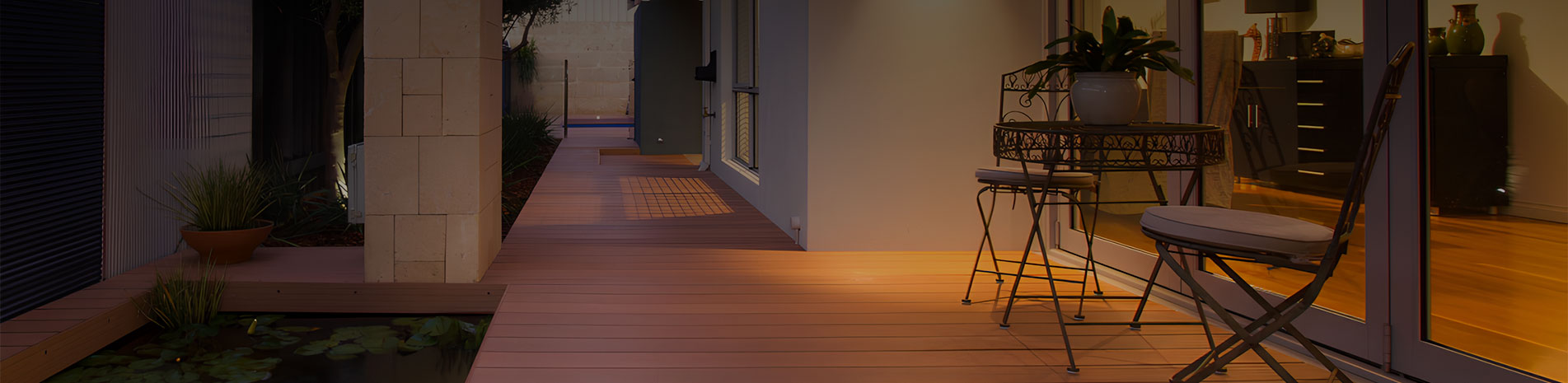
In stark contrast, classic WPC is a mono-extruded mixture of 60% wood fiber and 30% polymer. Because the raw cellulose fibers are uniformly exposed across the entire surface of the board, the material absorbs light rather than reflecting it. This micro-porous surface structure scatters solar radiation, resulting in Matte Finish Traditional Composite Boards that visually replicate the subdued, glare-free appearance of authentic, kiln-dried timber. For projects integrating biophilic design—where the goal is to blend the built environment seamlessly with the natural landscape—this lack of synthetic glare is an architectural mandate.
Dynamic Coefficient of Friction (DCOF): The Anti-Slip Advantage
In commercial and municipal applications, liability mitigation supersedes aesthetics. When designing public boardwalks, elderly care facilities, university pedestrian bridges, or high-traffic municipal parks, architects must adhere to strict safety protocols regarding slip resistance, often governed by ADA (Americans with Disabilities Act) guidelines or equivalent international safety codes.
The slip resistance of a flooring material is quantified by its Dynamic Coefficient of Friction (DCOF). A pure polymer surface, no matter how deeply embossed, becomes inherently slick when subjected to standing water, morning frost, or wet autumn leaves. The water forms a continuous microfilm over the impermeable plastic shield, drastically reducing traction.
Uncapped composite decking excels in these high-liability environments. The exposed wood fibers on the surface of the board absorb microscopic amounts of surface moisture, breaking the tension of the water film. Furthermore, the brushed or sanded manufacturing finish exposes the raw organic texture, creating a high-friction mechanical grip under footwear or bare feet. By specifying Anti Slip Classic Composite Decking, commercial contractors provide developers with a surface that significantly outperforms pure plastics and sealed woods in wet-weather traction tests.
Material Classification
Surface Specular Gloss (Light Reflection)
Wet Condition Slip Resistance (Traction)
100% Cellular PVC
High (Noticeable synthetic glare)
Moderate to Low (Can become slick when pooled)
Generation 2 (Capped WPC)
Moderate (Dependent on embossing depth)
Moderate (Polymer cap creates surface tension)
Generation 1 (Uncapped WPC)
Very Low (True matte light absorption)
Excellent (Exposed wood fibers provide high grip)
Tactile Authenticity and Sensory Architecture
Architecture is not merely visual; it is deeply sensory. In luxury residential environments, boutique eco-resorts, and high-end outdoor spa facilities, the tactile feedback of the flooring—how it feels under bare feet—is a critical design metric. Capped composites, despite having highly sophisticated, multi-chromatic wood grain patterns printed onto their surfaces, ultimately feel like engineered polymer beneath the skin. They are smooth, rigid, and thermally conductive in a way that betrays their synthetic origins.
Because classic WPC lacks this polymer shield, the physical touch of the board is dominated by the 60% wood flour content. It retains a slight organic warmth and the microscopic roughness inherent to natural cellulose. This sensory authenticity allows architects to utilize Natural Wood Texture WPC Decking in premium barefoot zones without shattering the illusion of natural materials. The brushed finish gently exfoliates the skin, offering a grounding, organic connection that plastics simply cannot replicate.
Intentional Weathering: Blending into the Landscape
While the mainstream market views color fading as a material defect, avant-garde architects often view it as a design tool. Natural timber, such as cedar or teak, is highly prized for its ability to weather over time, slowly transitioning from a rich brown to a distinguished silver-gray patina. This weathering process allows a newly constructed building to visually settle into its surrounding landscape over its first year.
Capped composites are engineered to be entirely static; a board installed today will look exactly the same in two decades. For certain rustic, coastal, or alpine architectural styles, this static perfection looks entirely unnatural against a dynamically changing environment. Uncapped WPC undergoes a predictable, controlled photo-oxidation process. The exposed lignin on the surface interacts with UV light, allowing the board to naturally lighten by 10% to 20% over the first few months before stabilizing. This subtle weathering mimics the lifecycle of raw timber, providing a "living" aesthetic while completely avoiding the rot, splintering, and structural degradation that plague natural wood.
Strategic Commercial Procurement and Scaling
Beyond aesthetics and physics, the specification of uncapped composites in large-scale projects often comes down to procurement efficiency. When developing massive infrastructures—such as multi-kilometer nature trail boardwalks, sprawling residential subdivision fencing, or expansive community decking—the budget multiplier effect is severe.
Specifying a premium capped composite for a 10,000-square-meter municipal project may easily overrun the public works budget. However, utilizing traditional treated lumber introduces a catastrophic future maintenance liability for the city. Traditional uncapped WPC occupies the perfect commercial sweet spot. It delivers the essential structural requirements—termite resistance, rot prevention, and elimination of chemical staining—at a procurement cost that makes massive volume scaling financially viable for developers. By understanding the unique optical, tactile, and financial benefits of first-generation composites, industry professionals can specify the exact material that perfectly aligns with both the architectural vision and the project ledger.