The Architectural Aesthetics of Classic WPC: Embracing Matte Finishes and Biophilic Design
May, 19 2026
In the realm of contemporary landscape architecture, the creation of an outdoor space is no longer a mere exercise in structural engineering; it is the orchestration of a sensory experience. As the design industry leans profoundly into Biophilic Design—the philosophy of increasing human connectivity to the natural environment—architects face a distinct aesthetic dilemma. The challenge lies in specifying outdoor flooring that delivers the extreme durability of advanced synthetic polymers without sacrificing the visual, tactile, and emotional soul inherent to natural materials.
While Generation 2 capped composites currently dominate the mass residential market with their hyper-realistic printed wood grains and impermeable plastic shields, a discerning segment of elite architects and boutique resort developers continues to exclusively specify first-generation, uncapped Wood-Plastic Composites (WPC). This preference is rarely a budget-driven compromise; rather, it is a deliberate, uncompromising aesthetic manifesto. This technical and sensory exploration reveals how the optical physics, acoustic resonance, and graceful weathering processes of classic WPC make it an irreplaceable medium for spaces designed to breathe and evolve.
Optical Physics: The Golden Hour and the Eradication of Plastic Glare
The most immediate and jarring visual critique of heavily engineered synthetic building materials is their refractive index. When specifying outdoor flooring for expansive commercial terraces, luxury coastal promenades, or open-air municipal botanical gardens, the surface is subjected to the brutal, direct intensity of midday sunlight, as well as the low, sweeping angles of the "Golden Hour" at dawn and dusk.
Capped composites, which utilize a pure high-density polyethylene (HDPE) or ionomer outer shell, inherently possess high specular gloss. Even when manufacturers attempt to mitigate this through deep 3D embossing, this plastic shield inevitably catches the sun, creating an unnatural glare, or "sheen," that instantly betrays its synthetic origin. It reflects light sharply, drawing unwanted attention to the floor rather than the surrounding landscape.
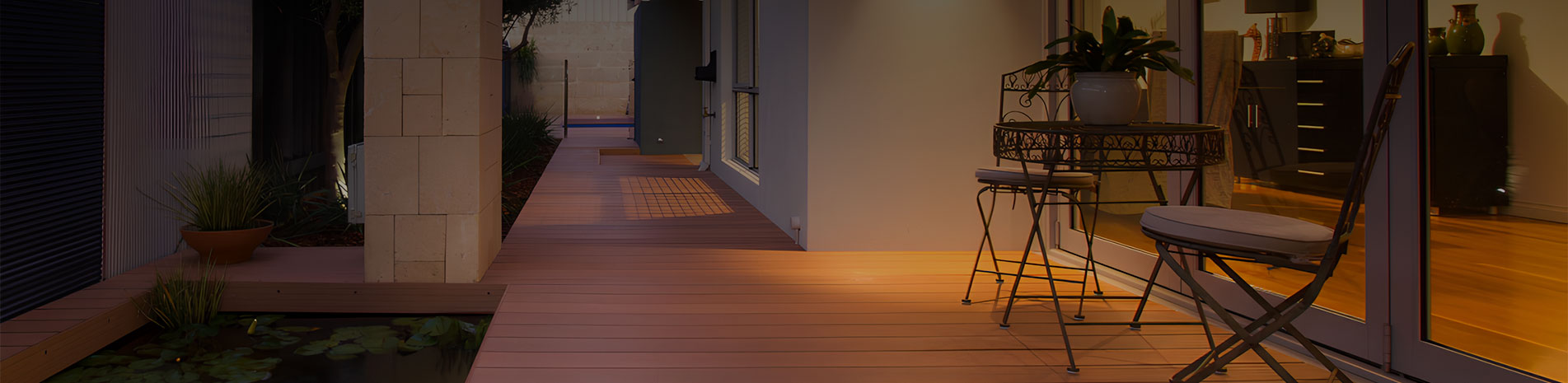
Classic WPC achieves a radically different, deeply organic optical result. Because it is a mono-extruded mixture containing up to 60% raw hardwood flour, microscopic cellulose fibers are permanently exposed across the entire surface geometry. Instead of reflecting solar radiation, these organic fibers actively absorb and scatter the light—a process known as diffuse reflection. This micro-porous structure is precisely what creates authentic Matte Finish Wood Plastic Decking. By eliminating sterile, artificial glare, classic WPC visually grounds the architectural space. It allows the flooring to serve as a subdued, elegant canvas, permitting the eye to rest naturally on the surrounding flora, water features, and architectural stone.
Tactile Authenticity: The Barefoot Luxury of Sensory Architecture
True luxury in architecture is not merely visual; it is profoundly tactile. In barefoot zones—such as high-end spa retreats, private residential courtyards, and Zen-inspired meditation pavilions—the physical sensation of the floor beneath the skin heavily dictates the occupant's psychological comfort and sense of belonging. Pure plastic surfaces, despite their complex visual texturing, feel thermally conductive and inherently alien to the human touch. They lack the microscopic abrasions, the subtle friction, and the earthy warmth of true timber.
Because classic WPC intentionally omits a smooth polymer shell, its physical touch is entirely dominated by the raw wood content embedded within. The standard factory processes of wire-brushing or sanding the boards expose these internal fibers, creating a subtle, organic roughness. Specifying Natural Wood Grain WPC Flooring allows designers to provide a surface that gently exfoliates the skin, offering a grounding connection to the earth that artificial plastic shields simply cannot replicate. This tactile authenticity bridges the critical gap between the sterile built environment and the untamed natural landscape, fulfilling the most fundamental tenet of sensory architecture.
Acoustic Resonance: The Sound of Organic Density
An often-overlooked dimension of architectural design is acoustic feedback. The sound of footsteps across a deck profoundly impacts the perception of quality. Hollow cellular PVC or lightweight plastic decking often produces a high-pitched, hollow "clack" when walked upon with hard-soled shoes, generating an acoustic signature that feels cheap and synthetic.
Classic WPC is remarkably dense. The high concentration of compacted wood flour, bound tightly by thermoplastics, creates a heavy, monolithic mass. When traversed, it yields a deep, muted, and resonant "thud"—an acoustic profile nearly identical to thick, solid hardwood planks. This subtle auditory feedback reinforces the illusion of walking on ancient, substantial timber, deepening the immersive biophilic experience for the occupant without them even consciously realizing why the space feels so premium.
The Patina Process: Wabi-Sabi and Designing with Time
In mainstream building material marketing, any form of color fading is universally categorized as a product failure. However, in high-end architectural theory—particularly in designs influenced by the Japanese philosophy of Wabi-Sabi, which finds beauty in natural aging and impermanence—the natural weathering of a material is highly prized. Premium organic materials like Western Red Cedar, Brazilian Ipe, and Burmese Teak are celebrated specifically because they undergo a graceful transformation, shifting from raw, vibrant tones into distinguished, silver-gray patinas over time. This evolution allows a newly constructed building to visually "settle" into its surrounding environment, looking as though it has belonged there for centuries.
Modern capped composites are engineered to be entirely static; a board installed today will look aggressively identical in thirty years. While functionally impressive, this static perfection can appear visually jarring and sterile when placed against dynamically changing natural elements like weathering limestone, growing moss, and rusting Corten steel. Classic WPC, conversely, undergoes a predictable, controlled photo-oxidation process. The surface lignin interacts with UV light, allowing the board to naturally lighten by 10% to 20% during its first season before stabilizing into a permanent, softer, and highly organic hue. This subtle weathering mimics the beautiful lifecycle of raw timber, providing a "living" aesthetic while entirely avoiding the structural decay, splintering, and rot that inevitably destroy natural wood.
Aesthetic & Sensory Dimension
Generation 2 (Capped Polymer WPC)
Generation 1 (Classic Uncapped WPC)
Natural Premium Timber (Cedar/Ipe)
Light Reflection (Specular Glare)
Moderate to High (Plastic sheen visible in direct sun)
Zero Glare (Deep matte light absorption)
Zero Glare (Deep matte light absorption)
Tactile Feedback (Barefoot Feel)
Smooth, synthetic, thermally conductive
Brushed, organic roughness, earthy and warm
Organic roughness, but carries high risk of splinters
Acoustic Signature (Footsteps)
Higher pitch, often "clicky" depending on core density
Deep, muted resonance, mimicking solid wood
Deep, muted resonance
Visual Evolution Over Time
Completely static; unchanging perfection
Graceful initial weathering, then permanent stabilization
Continuous fading, turning gray, eventual structural decay
Achieving Visual Harmony in Commercial Masterpieces
The ultimate architectural success of outdoor commercial flooring lies in its invisible integration with its surroundings. When landscape architects design seamless transitions between highly curated indoor commercial spaces and raw, unpredictable outdoor environments, the materials specified must act as a bridge between human engineering and the natural world.
Integrating Biophilic Design Traditional Composite Boards into a master site plan provides architectural specifiers with a profoundly unique asset: a material that behaves visually and acoustically like ancient wood, yet performs structurally like an advanced modern polymer. It does not attempt to scream for attention with high-gloss plastic finishes or exaggerated, multi-chromatic printed grains. Instead, it offers a deeply authentic, muted, and texturally rich foundation. By understanding and embracing the unique optical scattering, tactile warmth, and graceful aging properties of uncapped WPC, architects can craft timeless spaces that feel established, organic, and effortlessly sophisticated from the very moment they are installed.