

WPC Wall Panels vs Traditional Wood: Which Wall Material Offers Better Performance?


Author
With years of experience in exterior building materials, I specialize in advanced wood-plastic composite (WPC) technologies. My goal is to help architects, contractors, and project managers navigate the complexities of modern decking solutions. By bridging the gap between structural engineering and sustainable design, I share practical insights to ensure your outdoor projects achieve maximum durability and the best possible ROI.
Alex Carter


When homeowners, architects, and interior designers choose wall finishing materials, the decision often comes down to two popular options: WPC wall panels and traditional wood. Wood has been used for centuries because of its natural appearance and timeless character. However, modern construction requirements now demand materials that offer better durability, easier maintenance, and improved resistance against environmental challenges.
WPC (Wood Plastic Composite) wall panels have emerged as an alternative solution by combining wood fibers with polymer technology. This hybrid structure provides the visual warmth of wood while addressing many weaknesses found in natural timber. But does WPC really outperform traditional wood? This detailed comparison examines durability, cost, installation, environmental performance, maintenance, and long-term value.
Understanding the Difference Between WPC and Traditional Wood
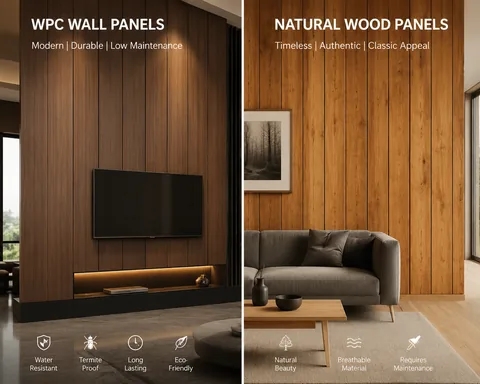
Traditional wood is a natural material harvested from trees such as oak, pine, cedar, and walnut. Its unique grain patterns and natural texture make it attractive for interior and exterior applications. However, because wood is an organic material, it reacts strongly to moisture, temperature changes, insects, and UV exposure.
WPC wall panels are engineered products made from approximately 50–70% wood fiber combined with 30–50% thermoplastics and additives. The manufacturing process creates a dense composite structure that reduces water absorption and improves dimensional stability. For contractors, distributors, and construction companies looking for reliable bulk solutions, choosing a Wholesale WPC Wall Panels Supplier can help ensure consistent product quality, stable pricing, and long-term project support.
| Material Feature | WPC Wall Panels | Traditional Wood |
|---|---|---|
| Main Composition | Wood fibers + polymer resin + stabilizers | Natural timber |
| Water Absorption | Usually below 3% | Can exceed 20% depending on species |
| Maintenance Requirement | Low maintenance | Regular sealing, painting, or staining required |
| Average Service Life | 20–30 years with proper installation | 10–50 years depending on maintenance and wood type |
Durability Comparison: Which Material Lasts Longer?
Durability is one of the most important factors when selecting wall materials. Natural wood performs well in controlled indoor environments, but it becomes vulnerable when exposed to humidity, rain, or temperature fluctuations.
WPC wall panels are designed specifically to overcome these limitations. The polymer component creates a protective barrier that prevents excessive moisture penetration. This makes WPC suitable for areas such as bathrooms, balconies, kitchens, commercial spaces, and coastal buildings.
For projects requiring long-term stability, many contractors choose Durable WPC Interior Wall Panels because they maintain their shape and appearance under changing environmental conditions.
| Performance Factor | WPC Wall Panels | Traditional Wood |
|---|---|---|
| Moisture Resistance | Excellent; resistant to swelling and warping | Low to moderate; depends on treatment |
| Termite Resistance | High resistance | Requires chemical protection |
| Cracking Risk | Low | Higher due to natural expansion and contraction |
| Color Stability | Good with UV additives | May fade without protective coating |
Maintenance Requirements and Long-Term Costs
The initial purchase price is only part of the total investment. Maintenance costs often determine the real value of a wall material over its lifespan.
Traditional wood usually requires periodic sanding, staining, painting, and waterproof treatment. According to building maintenance studies, exterior wood surfaces often require protective treatment every 2–5 years depending on climate conditions.
WPC panels require significantly less maintenance. Regular cleaning with water and mild detergent is usually sufficient. There is no need for frequent repainting or chemical sealing, which reduces both labor costs and material expenses.
| Cost Category | WPC Wall Panels | Traditional Wood |
|---|---|---|
| Installation Cost | Moderate | Moderate to high |
| Annual Maintenance | Very low | Medium to high |
| Repair Frequency | Rare | More frequent in humid climates |
| 10-Year Ownership Cost | Generally lower | Higher due to maintenance |
Appearance and Design Flexibility
One reason traditional wood remains popular is its authentic natural beauty. Every wooden board has unique grain patterns, colors, and textures that create a premium visual effect.
Modern WPC technology has significantly improved appearance quality. Advanced embossing and surface treatment techniques can reproduce realistic wood textures while offering more design options than natural timber.
For contemporary interiors, products such as Modern Wood Grain WPC Panels provide designers with consistent patterns, multiple colors, and easier matching between different spaces.
| Design Aspect | WPC Panels | Natural Wood |
|---|---|---|
| Texture Options | Wide variety of simulated wood finishes | Limited by natural species availability |
| Color Selection | Many customizable options | Mostly natural tones |
| Pattern Consistency | Highly consistent | Every piece is different |
Environmental Impact: Which Material Is More Sustainable?
Sustainability has become an important consideration in modern construction. Traditional wood is renewable when sourced from responsibly managed forests, but excessive harvesting can contribute to deforestation.
WPC products often use recycled plastic materials and wood waste, reducing demand for virgin resources. Many manufacturers also produce recyclable WPC panels at the end of their service life.
| Environmental Factor | WPC | Traditional Wood |
|---|---|---|
| Resource Usage | Uses recycled materials in many cases | Requires harvesting trees |
| Waste Reduction | Can utilize wood processing waste | More cutting waste during installation |
| Recyclability | Possible depending on composition | Biodegradable but not always reusable |
Installation Process Comparison
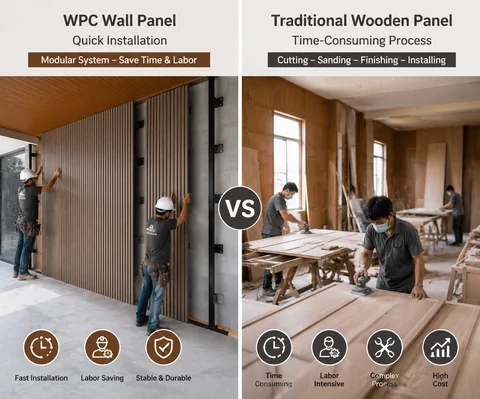
Installation efficiency directly affects project schedules and labor costs. Traditional wood installation requires careful measurement, cutting, finishing, and surface protection.
WPC wall panels usually feature lightweight structures and interlocking systems. This allows faster installation with fewer specialized tools. In commercial projects where construction speed matters, WPC can reduce installation time significantly.
| Installation Factor | WPC Wall Panels | Traditional Wood |
|---|---|---|
| Installation Speed | Fast due to modular design | Slower due to preparation work |
| Skill Requirement | Lower | Higher craftsmanship required |
| On-site Waste | Minimal | Higher cutting waste |
Where Should You Choose WPC Instead of Wood?
Although WPC offers many advantages, the best choice depends on the project environment. Traditional wood remains an excellent option for luxury interiors where authentic natural materials are the priority.
However, WPC is often the better choice for locations exposed to moisture, temperature variation, or heavy usage. Common applications include:
- Residential feature walls
- Hotels and restaurants
- Office interiors
- Bathroom and kitchen wall decoration
- Outdoor covered areas
- Commercial renovation projects
For exterior applications where weather resistance is critical, many builders prefer weather resistant WPC wall cladding because it provides better protection against humidity, rain exposure, and daily temperature changes.
Choosing the Right Wall Material for Your Project
The choice between WPC and traditional wood depends on your priorities. If the goal is achieving a completely natural aesthetic for a premium indoor space, wood remains a strong option. However, if you need a material that combines appearance, durability, low maintenance, and resistance to environmental stress, WPC wall panels provide a more practical solution.
As construction technology continues to develop, composite materials are becoming increasingly common in residential and commercial design. For many modern projects, the balance between performance and appearance makes WPC an attractive alternative to traditional timber.
- Marine WPC Decking: How Co-Extrusion Improves Performance in Coastal and Waterfront Applications
- Heavy-Duty WPC Decking for Walkways: Co-Extrusion, Load Capacity and Marine Applications
- How Fluted WPC Wall Cladding Elevates Commercial and Residential Exteriors
- Why WPC is the Best Material for Coastal Homes and Poolside Decks?
- WPC Decking Lifecycle Cost Analysis: Initial Price, Installation, Maintenance and Long-Term Value
- How to Install WPC Decking for Outdoor Projects: Step-by-Step Guide
- WPC Wall Panels for Interior & Exterior Projects: Types, Benefits, Applications & Buying Guide
- Co-Extrusion WPC Decking: Benefits, Performance, Cost & B2B Buying Guide