

Is Composite Decking Eco-Friendly? The Sustainability Guide for Commercial Projects

Author
With years of experience in exterior building materials, I specialize in advanced wood-plastic composite (WPC) technologies. My goal is to help architects, contractors, and project managers navigate the complexities of modern decking solutions. By bridging the gap between structural engineering and sustainable design, I share practical insights to ensure your outdoor projects achieve maximum durability and the best possible ROI.
Alex Carter


In the contemporary commercial construction sector, sustainability is no longer merely a corporate social responsibility initiative; it is a rigid procurement requirement. Municipalities, educational institutions, and corporate headquarters are increasingly mandating adherence to strict environmental frameworks like LEED (Leadership in Energy and Environmental Design), BREEAM, and the Living Building Challenge. When architectural specifiers draft the material schedule for public boardwalks or high-density residential developments, submitting a bid based solely on the lowest price is a guaranteed path to rejection.
Traditional timber is frequently disqualified in modern commercial tenders due to its reliance on aggressive deforestation and toxic chemical treatments. To secure these lucrative, high-profile contracts, sourcing managers and lead contractors must present Eco-Friendly Outdoor Commercial Decking backed by verifiable, quantifiable environmental data regarding carbon sequestration, chemical inertness, and circular economy metrics.
The Circular Economy: Diverting Industrial and Consumer Waste
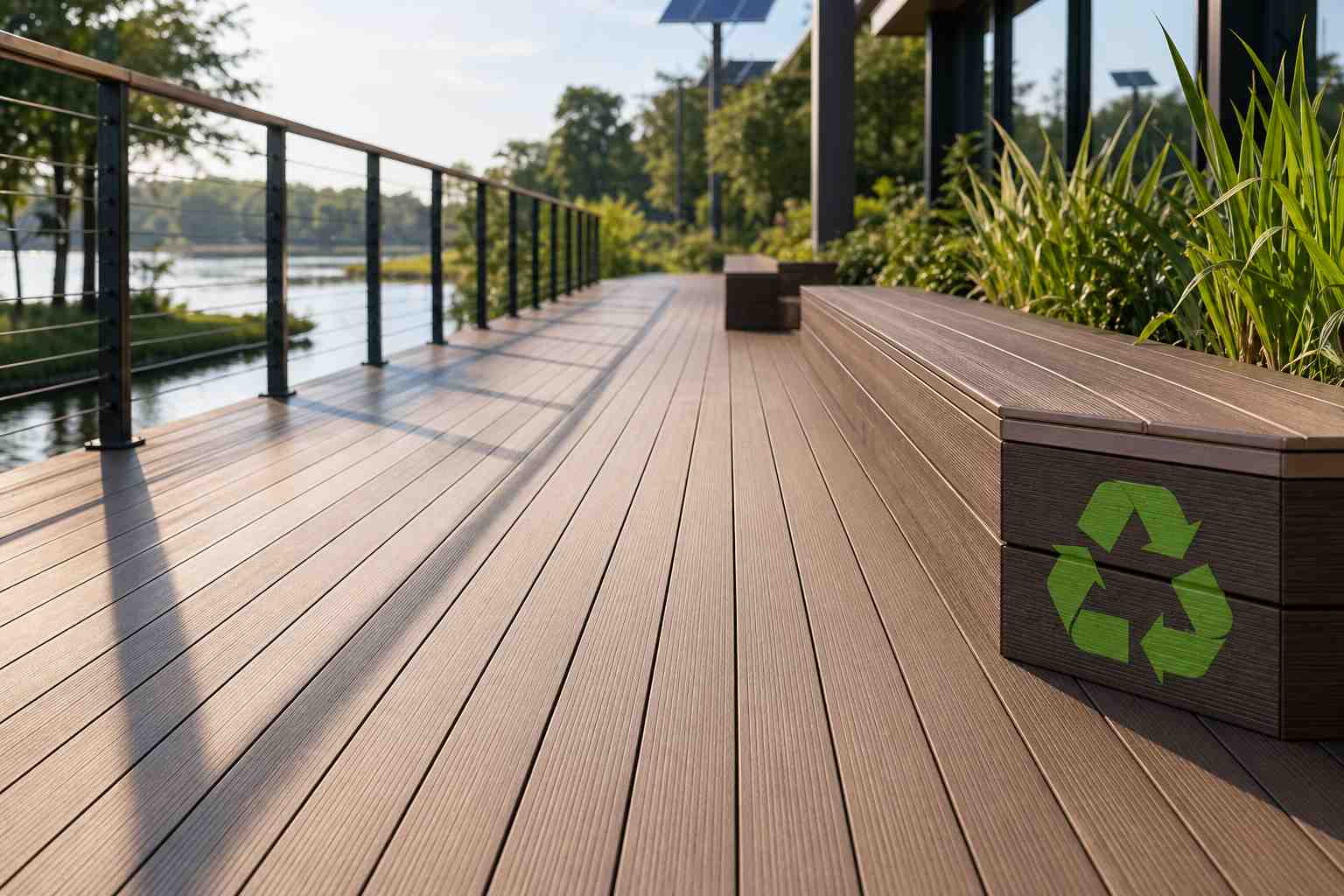
The manufacturing process of premium co-extruded composites represents one of the most efficient circular economies in the building materials sector. Unlike pressure-treated pine, which requires the continuous harvesting of raw lumber, or 100% cellular PVC, which relies entirely on the extraction of virgin petrochemicals, true co-extrusion technology acts as a massive carbon sink.
The structural core of these advanced boards is typically comprised of up to 95% reclaimed material. The organic fraction consists of hardwood fibers reclaimed from cabinet makers, flooring factories, and sawmills. By capturing this industrial sawdust before it enters landfills, manufacturers prevent organic decomposition that releases methane—a greenhouse gas exponentially more potent than carbon dioxide. The thermoplastic binding matrix utilizes post-consumer High-Density Polyethylene (HDPE). Specifying Recycled Wood Plastic Composite Materials effectively diverts thousands of tons of single-use plastics (such as detergent bottles, milk jugs, and commercial packaging) from global waterways and terrestrial landfills for every medium-sized commercial project.
| Material Category | Primary Raw Material Source | Environmental Impact Profile (End of Life) |
|---|---|---|
| Pressure-Treated Softwood | Harvested raw timber logs | Toxic landfill hazard due to chemical preservatives |
| Cellular PVC Decking | 100% Virgin Synthetic Petrochemicals | Non-biodegradable; extreme embodied carbon debt |
| Co-Extruded Composite | 95% Reclaimed Wood Fiber & Recycled HDPE | Fully melt-recyclable into next-generation products |
Chemical Leaching: Protecting Sensitive Aquatic Ecosystems
The ecological threat of traditional wood decking extends far beyond the initial logging phase. Because natural sapwood has zero inherent resistance to fungal decay or termite infestation, it must be aggressively pressure-treated. This involves injecting the timber with heavy metal preservatives, most commonly Alkaline Copper Quaternary (ACQ) or Copper Azole (CA-C).
Over a standard commercial lifespan, rain and ambient moisture systematically leach these heavy metal compounds out of the cellular structure of the timber and directly into the surrounding soil profile and groundwater table. For projects situated near sensitive environments—such as municipal marinas, wetland observation boardwalks, or coastal resort patios—this chemical leaching is an unacceptable ecological hazard that violates modern environmental protection codes. Co-extrusion technology creates a chemically inert product. The polymer shield entirely encapsulates the internal fibers, establishing a zero-leaching profile that safely interacts with marine environments without contaminating the local biosphere.
Eradicating VOC Emissions During the Operational Life Cycle
When evaluating the environmental footprint of a building material, procurement managers must account for the operational phase. A timber deck requires rigorous chemical maintenance. Every two to three years, maintenance crews must strip the wood using harsh chemical solvents, followed by the re-application of industrial stains, oils, and polyurethane sealants.
These post-installation treatments release massive amounts of Volatile Organic Compounds (VOCs) into the local atmosphere, severely degrading localized air quality and posing health risks to patrons in high-density commercial spaces like outdoor dining venues. Specifying High-Performance Capped Composite Decking instantly eliminates this recurring pollution. The engineered polymer capstock requires zero chemical treatment, staining, or sealing throughout its multi-decade lifespan, ensuring zero VOC emissions post-installation.
Life Cycle Assessment (LCA) and Carbon Footprint Analytics
Sophisticated B2B specifiers utilize a metric known as the Life Cycle Assessment (LCA) to evaluate a material's true environmental validity. The LCA measures everything from raw material extraction and extrusion energy to transportation logistics, operational maintenance, and end-of-life disposal.
While the initial embodied energy required to thermally extrude a composite board is higher than milling a basic timber board, the LCA of the composite rapidly overtakes timber. Traditional commercial wood decks typically require complete structural replacement every 10 to 12 years due to rot and splintering. This effectively doubles or triples the carbon footprint of the project over a standard 30-year span. A properly engineered composite board remains structurally sound and aesthetically pristine for up to 30 years with a single initial installation footprint.
| 30-Year Sustainability Metric | Treated Timber Decking | Capped Composite Decking |
|---|---|---|
| Material Replacement Cycles | 2 to 3 full replacements | Zero replacements required |
| VOC Airborne Emissions | High (Requires 10+ re-staining events) | Absolute Zero |
| Heavy Metal Soil Leaching | Significant (ACQ / Copper Azole) | Absolute Zero (Inert polymer) |
Navigating LEED v4.1 Certification Through Material Selection
Architects and real estate developers utilize the USGBC LEED point system to gauge a commercial building's overall environmental efficiency. Integrating the correct decking material directly impacts several crucial credit categories, most notably within the "Materials and Resources" (MR) sector. Modern co-extrusion technology provides a clear, documented path to fulfilling the requirements for "Building Product Disclosure and Optimization - Sourcing of Raw Materials."
When a contractor presents a bid featuring Environmental Product Declarations (EPDs) that prove a high percentage of post-consumer recycled polymers and reclaimed industrial fibers, they are no longer just selling a floor. They are providing the architectural firm with a tangible, verifiable asset in their pursuit of Platinum or Gold Green Building status. This level of technical data transparency fundamentally elevates a construction bid from a standard material quote to a strategic, indispensable environmental partnership.
- How to Calculate WPC Decking Quantities for Large Projects: Board Coverage, Waste and Accessories
- WPC Decking for Rooftop Terraces: Load Planning, Drainage and Waterproofing Risks
- What Technical Documents Should You Request from a WPC Wall Cladding Manufacturer?
- How to Maintain WPC Wall Cladding Color Consistency in Large Projects
- How to Calculate WPC Wall Cladding Quantities: Panel Coverage, Cutting Waste and Accessories
- WPC Exterior Wall Cladding for Building Renovation: How to Check Substrates, Fixings and Ventilation
- WPC Decking for Hotels and Resorts: How to Choose Materials for Outdoor Areas
- WPC Decking for Commercial Projects: How to Specify Boards for Traffic and Climate