

Why WPC is the Best Material for Coastal Homes and Poolside Decks?


Author
With years of experience in exterior building materials, I specialize in advanced wood-plastic composite (WPC) technologies. My goal is to help architects, contractors, and project managers navigate the complexities of modern decking solutions. By bridging the gap between structural engineering and sustainable design, I share practical insights to ensure your outdoor projects achieve maximum durability and the best possible ROI.
Alex Carter


Waterfront properties and backyard swimming pools represent premium real estate investments, offering immediate recreation and significant property value boosts. However, constructing an outdoor living space next to the ocean or a chlorinated pool introduces a specific set of structural challenges. The combination of standing water, salt spray, high UV index, and pool chemicals creates a highly corrosive microclimate. This environment actively breaks down conventional building materials within a matter of years, leading to safety hazards and expensive replacements.
Contractors, architects, and homeowners continually face the rapid degradation of traditional timber in these wet zones. The constant need for maintenance, structural repair, and splinter management often offsets the enjoyment of the space. The building industry has shifted toward advanced composites to solve these exact problems, providing a stable, visually authentic, and structural alternative for waterfront architecture.
The Chemical and Environmental Stress on Traditional Wood
To understand material failure near water, one must look at the environmental stressors involved. Coastal areas maintain constant exposure to salt-laden moisture in the air. Salt is naturally hygroscopic, meaning it actively attracts and holds onto water molecules. When airborne salt settles on a traditional wooden deck, it pulls atmospheric moisture directly into the wood grain, preventing the boards from ever completely drying out and accelerating the fungal rot process.
Poolside environments are equally punishing, but for different chemical reasons. The water splashed out of a swimming pool contains chlorine, bromine, algaecides, and pH balancing acids. When these chemicals soak into natural timber, they react with the lignin—the organic polymer that holds wood fibers together. This chemical reaction slowly dissolves the structural integrity of the wood, causing it to become brittle, bleach out, and crack.
Furthermore, the daily cycle of getting soaked and then baking in the afternoon sun causes extreme thermal expansion and contraction. Wood absorbs water and swells, then dries and shrinks. This constant movement pulls nails and screws loose and causes the boards to warp and cup. Industry testing shows that untreated pine or cedar installed within a 50-foot radius of a saltwater body or chlorinated pool loses up to 40% of its structural density faster than the identical material in a dry, inland setting.
The Engineering of Co-extrusion Technology
Wood-Plastic Composite (WPC) was engineered specifically to bridge the gap between organic aesthetics and synthetic durability. Early generations of WPC improved upon natural wood, but the manufacturing breakthrough for extreme wet environments is co-extrusion technology. This process involves manufacturing a solid core made from recycled wood fibers and dense high-density polyethylene (HDPE) plastics, which is simultaneously encased in a 360-degree protective polymer shield.
This outer shield is completely impermeable. It functions as an absolute physical barrier against moisture penetration, UV radiation fading, and chemical degradation. Because the organic wood fibers remain fully sealed inside the core, they never make contact with rain, saltwater, or pool chemicals.
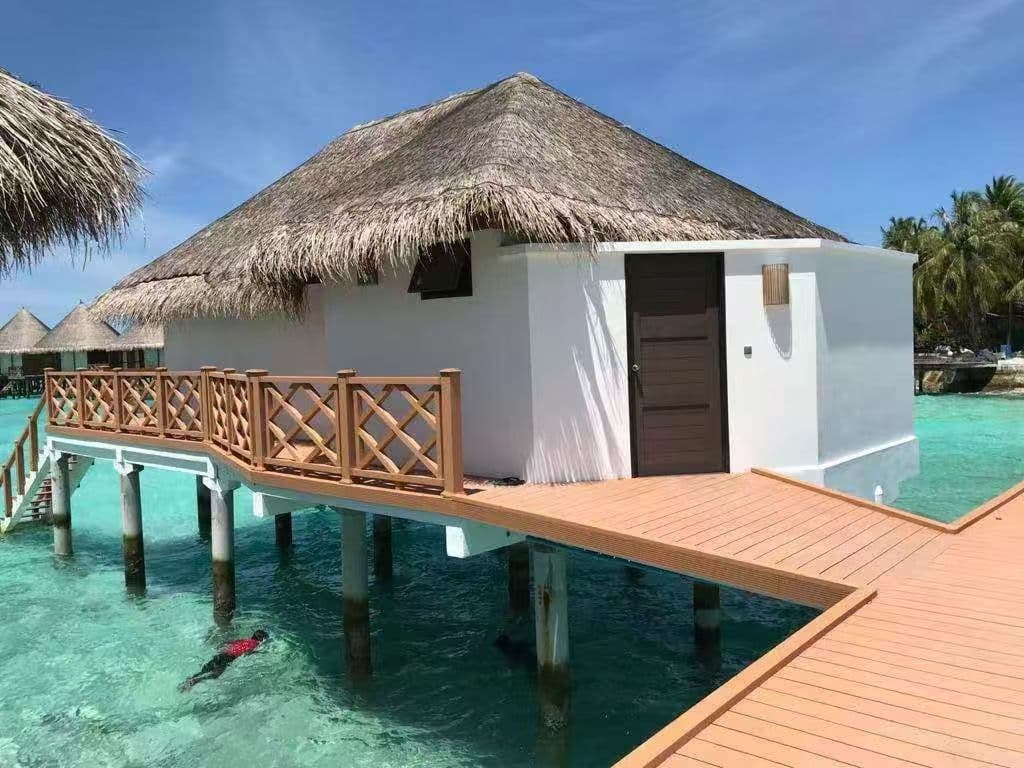
For commercial docks, coastal resorts, or heavy-traffic residential builds, specifying Marine Heavy-Duty Co-Extrusion Composite Decking handles the extreme load-bearing requirements while resisting the corrosive effects of constant moisture. The co-extruded cap layer also prevents staining from common outdoor spills like sunscreen oils, red wine, or barbecue grease, which can permanently ruin natural wood.
Slip Resistance and Barefoot Safety
When planning a deck layout around a swimming pool or a beach access walkway, surface safety is the primary metric. These areas experience heavy barefoot traffic and are frequently wet. Natural timber, once wet, develops a dangerously low friction coefficient, especially when microscopic algae or moss begins to grow in the damp crevices of the wood grain.
Physical breakdown of wood also guarantees splinters. A splinter can cause serious injury, posing a major liability for commercial hospitality properties and a persistent danger to families at home.
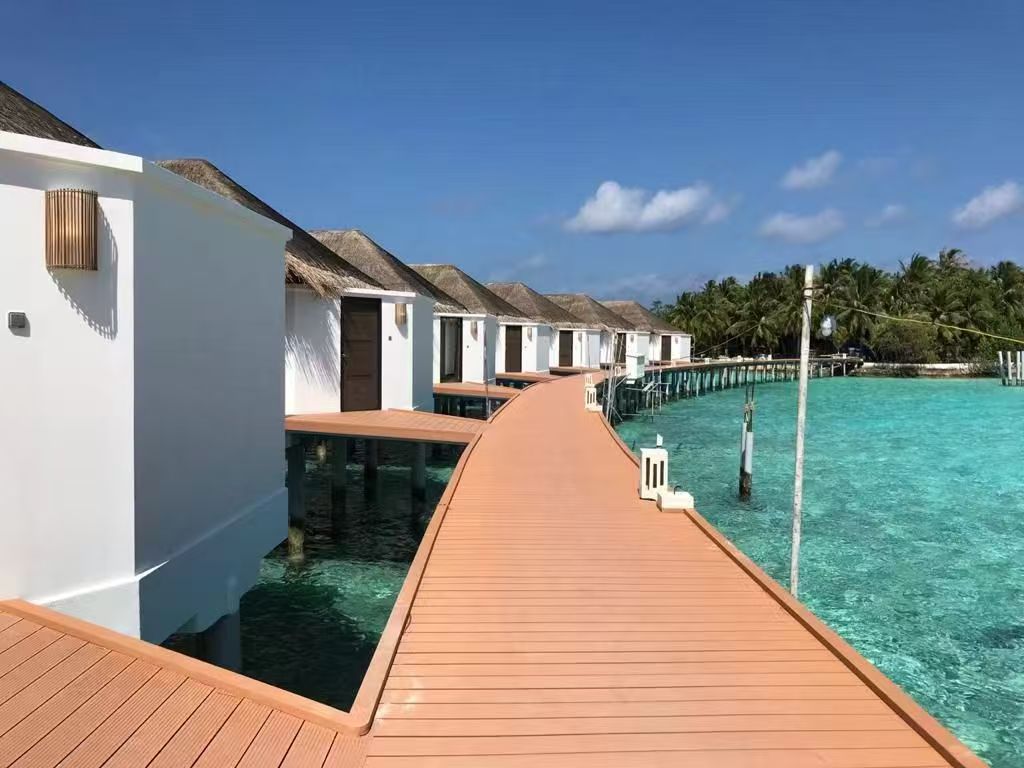
High-quality composites eliminate the splinter risk entirely; the synthetic polymer cap structurally cannot fray or split. To address wet traction, manufacturers utilize deep-pressure molding to create textured surfaces. Utilizing Slip-Resistant 3D Embossed Decking ensures a high Coefficient of Friction (CoF) even when the surface is completely covered in water. The deep wood grain texture acts as a micro-drainage system, channeling water away from the foot and providing reliable grip.
Material Performance Benchmarks
Evaluating material specifications is necessary for long-term project planning. The following data highlights the performance differences between traditional lumber, uncapped composites, and modern co-extruded materials under wet conditions.
| Performance Metric | Treated Pine / Cedar | 1st Gen WPC (Uncapped) | Co-extruded WPC (Capped) |
|---|---|---|---|
| Moisture Absorption | 15% - 25% | 2% - 5% | < 0.5% |
| Wet Traction / Grip | Low (Algae prone) | Moderate | High (Engineered 3D Texture) |
| Chemical Resistance | Poor (Strips sealants) | Moderate | Excellent (Polymer shield) |
| Splinter & Crack Risk | High | Low | Zero |
| Required Maintenance | Annual sanding & staining | Periodic washing | Basic soap & water wash |
Total Cost of Ownership in Coastal Zones
Focusing only on the initial material cost of an outdoor project creates a distorted financial picture. While organic timber presents a lower upfront price at a lumberyard, its Total Cost of Ownership (TCO) multiplies rapidly in marine environments.
A wooden poolside deck demands a strict maintenance schedule. Every 12 to 18 months, the surface requires professional power washing, chemical stripping, and the re-application of premium marine-grade sealants. Over a 10-year timeline, the cumulative costs of these chemicals, replacement boards for rotted sections, and the intensive labor required routinely exceed the initial installation cost of the entire structure.
Installing Waterproof Poolside WPC Decking Boards actively eliminates these recurring expenses. Maintenance drops from days of hard labor to a simple seasonal wash using a standard garden hose. Financial models for residential and commercial decks indicate that the initial investment in co-extruded composites is fully recouped through maintenance savings by year five.
Aesthetics and Surface Temperature Management
Modern composite extrusion technology allows for highly specific color blending, replacing the artificial plastic look of early composites with realistic, multi-chromatic variations found in exotic hardwoods like Ipe or Teak. In coastal architecture, color selection impacts more than just visual design; it directly affects thermal comfort.
Darker wood stains absorb heat, making a deck uncomfortably hot for bare feet during peak summer hours. Advanced composites are available in lighter coastal shades—such as ash, silver grey, or bleached sand—which naturally reflect UV rays and maintain a lower surface temperature. Furthermore, the installation process utilizes hidden fastening systems that slide between the boards, resulting in a smooth, screw-free surface that visually seamlessly connects the indoor living room to the edge of the water.
- Marine WPC Decking: How Co-Extrusion Improves Performance in Coastal and Waterfront Applications
- Heavy-Duty WPC Decking for Walkways: Co-Extrusion, Load Capacity and Marine Applications
- How Fluted WPC Wall Cladding Elevates Commercial and Residential Exteriors
- Why WPC is the Best Material for Coastal Homes and Poolside Decks?
- WPC Decking Lifecycle Cost Analysis: Initial Price, Installation, Maintenance and Long-Term Value
- How to Install WPC Decking for Outdoor Projects: Step-by-Step Guide
- WPC Wall Panels for Interior & Exterior Projects: Types, Benefits, Applications & Buying Guide
- Co-Extrusion WPC Decking: Benefits, Performance, Cost & B2B Buying Guide